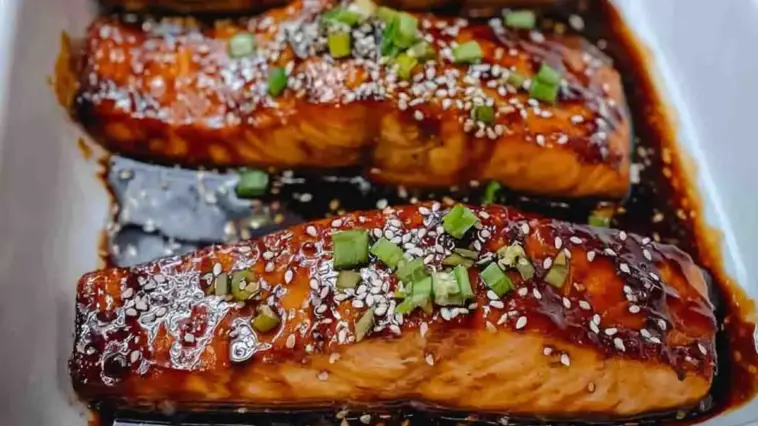
If you’re looking for a quick, restaurant-quality dinner that feels both comforting and healthy, this baked teriyaki salmon is about to become your go-to recipe. With its perfectly flaky texture and rich, glossy glaze, it delivers that irresistible balance of sweet, savory, and umami flavors in every bite.
What makes this dish even better? It’s incredibly easy to prepare. In less than 30 minutes, you can have a flavorful, nutritious meal on the table—perfect for busy weeknights or even a casual dinner with guests.
What Is Baked Teriyaki Salmon?
Baked teriyaki salmon is a dish inspired by the classic Japanese cooking technique known as “teriyaki,” where food is coated in a glaze made from soy sauce, sugar (or honey), and other flavorful ingredients like garlic and ginger.
Traditionally, teriyaki dishes are grilled, but baking salmon in the oven offers several advantages:
More consistent cooking
Less cleanup
Better control over moisture and texture
The result is a beautifully cooked salmon fillet with a caramelized glaze that enhances the natural richness of the fish.
Unlike pan-searing, which gives a crisp exterior, or grilling, which adds a smoky flavor, baking provides a gentle, even heat that keeps the salmon tender and juicy.
Why You’ll Love This Baked Teriyaki Salmon Recipe
There are countless reasons why this recipe stands out, especially if you value both flavor and convenience.
Quick & easy: Ready in under 30 minutes
Minimal ingredients: Simple pantry staples
Healthy choice: Rich in protein and omega-3 fatty acids
Family-friendly: Mild, slightly sweet flavor that appeals to all ages
Versatile: Works with many sides and meal styles
Pro Tip: This recipe is perfect for meal prep—just pair it with rice and vegetables for a balanced, ready-to-go lunch or dinner.
Ingredients for the Best Teriyaki Salmon (Simple & Fresh)
A great teriyaki salmon starts with fresh, high-quality ingredients. Each component plays a key role in building flavor.
For the Salmon
4 salmon fillets (about 150–180g each, fresh or thawed)
1 tablespoon olive oil
Salt and black pepper to taste
For the Teriyaki Sauce
1/4 cup soy sauce (low sodium preferred)
2 tablespoons honey or brown sugar
2 cloves garlic, minced
1 teaspoon fresh ginger, grated
1 tablespoon rice vinegar
1 teaspoon sesame oil
1 teaspoon cornstarch (optional, for thickening)
2 tablespoons water
Optional Garnishes & Add-ins
Sesame seeds
Sliced green onions
Red chili flakes (for a bit of heat)
Steamed broccoli or carrots (for serving)
Pro Tip: Using fresh garlic and ginger instead of powdered versions will dramatically improve the depth and authenticity of the flavor.
How to Make Baked Teriyaki Salmon (Step-by-Step)
This method is simple, but a few small techniques will take your salmon from good to absolutely amazing.
Step 1 – Preheat & Prep
Preheat your oven to 190°C (375°F). Line a baking sheet with parchment paper or foil to prevent sticking and make cleanup easier.
Step 2 – Make the Teriyaki Sauce
In a small saucepan, combine soy sauce, honey, garlic, ginger, rice vinegar, and sesame oil. Bring to a gentle simmer over medium heat.
If you prefer a thicker glaze, mix the cornstarch with water and stir it into the sauce. Let it cook for 1–2 minutes until slightly thickened.
Step 3 – Prepare the Salmon
Pat the salmon fillets dry with paper towels. This helps the sauce adhere better and improves texture.
Lightly season both sides with salt and pepper, then place the fillets skin-side down on the prepared baking sheet.
Step 4 – Bake the Salmon
Brush a generous layer of teriyaki sauce over each fillet. Bake in the preheated oven for 12–15 minutes, depending on thickness.
Step 5 – Glaze & Finish
During the last few minutes of baking, brush on additional sauce for a richer flavor.
For a slightly caramelized top, switch to broil mode for 1–2 minutes—just keep a close eye to prevent burning.
Bold Tip: The salmon is done when it flakes easily with a fork but still looks moist in the center. Overcooking will make it dry.
How Long to Bake Teriyaki Salmon (Timing Guide)
Getting the timing right is key to perfectly cooked salmon.
Thin fillets (1 cm): 10–12 minutes
Medium fillets (2–3 cm): 12–15 minutes
Thick fillets: up to 18 minutes
A good rule of thumb is to bake salmon for about 4–6 minutes per half-inch of thickness.
Tips for Perfectly Baked Teriyaki Salmon Every Time
Even though this recipe is simple, these expert tips will guarantee consistent, high-quality results:
Choose center-cut salmon fillets for even cooking
Always preheat your oven fully before baking
Avoid adding too much sauce at the beginning (it can burn)
Use parchment paper or foil for easy cleanup
Let the salmon rest for 2–3 minutes after baking
Expert Tip: Brush the sauce in layers—once before baking and again near the end—for a deeper, more developed flavor.
Delicious Variations of Baked Teriyaki Salmon You Should Try
One of the best things about baked teriyaki salmon is how easily you can customize it. Whether you like it sweeter, spicier, or healthier, there’s a variation for you.
Honey Garlic Teriyaki Salmon
For a richer, slightly sweeter flavor, increase the honey and garlic. This version is especially popular with kids and picky eaters.
Advertisement
Spicy Teriyaki Salmon
Add sriracha, chili paste, or red pepper flakes to the sauce for a bold kick. The heat balances beautifully with the sweetness.
Pineapple Teriyaki Salmon
Incorporate pineapple juice or chunks for a tropical twist. It adds natural sweetness and a refreshing flavor profile.
Low-Carb / Keto Teriyaki Salmon
Swap honey or sugar with a keto-friendly sweetener like erythritol or monk fruit. Use low-sodium soy sauce or coconut aminos.
Air Fryer Teriyaki Salmon
Short on time? Cook the salmon in the air fryer at 190°C (375°F) for 8–10 minutes. You’ll still get a juicy inside with a slightly crisp edge.
What to Serve with Baked Teriyaki Salmon
Pairing your salmon with the right sides can turn it into a complete, satisfying meal.
Steamed jasmine or brown rice
Garlic fried rice or noodles
Roasted vegetables like broccoli, asparagus, or carrots
Fresh cucumber salad or Asian slaw
Quinoa or grain bowls
Serving Idea: Create a teriyaki salmon bowl with rice, steamed veggies, avocado slices, and an extra drizzle of sauce. It’s perfect for both dinner and meal prep.
Is Baked Teriyaki Salmon Healthy?
Absolutely—baked teriyaki salmon is a nutrient-rich meal that fits into many healthy eating plans.
Salmon is:
High in protein, which supports muscle growth and repair
Packed with omega-3 fatty acids, beneficial for heart and brain health
A good source of vitamins like B12 and D
However, keep in mind:
Traditional teriyaki sauce can be high in sodium and sugar
Using low-sodium soy sauce and natural sweeteners helps balance it
Storage & Meal Prep Tips for Teriyaki Salmon
If you’re planning ahead, this recipe works beautifully for storage and meal prep.
Refrigerator: Store in an airtight container for up to 3–4 days
Freezer: Freeze cooked salmon for up to 2 months
Reheating: Warm gently in the oven or microwave with a splash of water to prevent drying
Meal Prep Tip: Portion salmon with rice and vegetables into containers for easy grab-and-go meals during the week.
Common Mistakes to Avoid When Baking Teriyaki Salmon
Even simple recipes can go wrong if you’re not careful. Here are the most common mistakes—and how to avoid them:
Overcooking the salmon: This leads to dryness
Adding too much sauce too early: It can burn before the fish is cooked
Skipping the drying step: Moisture prevents proper glaze adhesion
Not lining your baking tray: Makes cleanup harder and can cause sticking
Using low-quality soy sauce: Affects the overall taste
Expert Tip: Always keep an eye on the salmon during the last few minutes—this is when most overcooking happens.
Baked Teriyaki Salmon vs Grilled vs Pan-Seared
Each cooking method offers a different result, so the best choice depends on your preference.
Baked: Most consistent, juicy, and beginner-friendly
Grilled: Adds smoky flavor and slight char
Pan-seared: Crispy exterior with rich flavor
For convenience and reliability, baking is often the best option—especially for beginners or busy weeknights.
FAQs About Baked Teriyaki Salmon (People Also Ask)
Can I use frozen salmon for baked teriyaki salmon?
Yes, but make sure to fully thaw it in the refrigerator before cooking for the best texture and even baking.
How do you know when salmon is done baking?
Salmon is ready when it flakes easily with a fork and appears opaque. You can also check the internal temperature—guidelines are available from USDA.
Can I make teriyaki sauce ahead of time?
Absolutely. You can prepare it in advance and store it in the refrigerator for up to one week.
What temperature should salmon be baked at?
A range of 190–200°C (375–400°F) works best for even cooking and a tender texture.
Can I bake salmon without foil?
Yes, parchment paper or a lightly greased baking dish works just as well.
Is teriyaki salmon gluten-free?
It can be, as long as you use gluten-free soy sauce or tamari.
Baked Teriyaki Salmon is a quick and flavorful oven-baked dinner made with tender salmon fillets glazed in a sweet-savory teriyaki sauce with garlic, ginger, and sesame.
Ingredients
Scale
4 salmon fillets (about 150–180 g each)
1 tablespoon olive oil
Salt, to taste
Black pepper, to taste
1/4 cup soy sauce
2 tablespoons honey
2 cloves garlic, minced
1 teaspoon fresh ginger, grated
1 tablespoon rice vinegar
1 teaspoon sesame oil
1 teaspoon cornstarch (optional)
2 tablespoons water
1 tablespoon sesame seeds, for garnish
2 tablespoons sliced green onions, for garnish
Instructions
Preheat the oven to 375°F (190°C) and line a baking dish or baking sheet with parchment paper or foil.
In a small saucepan, combine soy sauce, honey, garlic, ginger, rice vinegar, and sesame oil over medium heat.
If using cornstarch, mix it with water in a small bowl, then stir it into the sauce. Simmer for 1–2 minutes until slightly thickened.
Pat the salmon fillets dry with paper towels and season lightly with salt and black pepper.
Arrange the salmon fillets skin-side down in the prepared baking dish.
Brush the tops of the salmon fillets generously with the teriyaki sauce.
Bake for 12–15 minutes, depending on the thickness of the fillets, until the salmon flakes easily with a fork.
Brush with more sauce during the last few minutes of baking for extra flavor and shine.
Optional: Broil for 1–2 minutes to lightly caramelize the glaze.
Remove from the oven, garnish with sesame seeds and sliced green onions, and serve warm.
Notes
Use low-sodium soy sauce if you want to reduce the saltiness.
Fresh garlic and ginger give the best flavor.
Do not overcook the salmon or it may turn dry.
You can use thawed frozen salmon if fresh salmon is not available.
Serve with rice, noodles, or steamed vegetables for a complete meal.
Store leftovers in an airtight container in the refrigerator for up to 3 days.
Nutrition
Serving Size:1 salmon fillet
Calories:320 kcal
Sugar:8 g
Sodium:680 mg
Fat:17 g
Saturated Fat:3 g
Unsaturated Fat:13 g
Trans Fat:0 g
Carbohydrates:10 g
Fiber:0 g
Protein:31 g
Cholesterol:85 mg
This baked teriyaki salmon recipe combines everything you want in a meal: simplicity, bold flavor, and versatility. It’s quick enough for a busy weekday but impressive enough to serve to guests.
With its rich glaze, tender texture, and endless customization options, it’s no surprise this dish remains a favorite in kitchens everywhere.
Try it once, experiment with the variations, and you’ll have a reliable, delicious recipe you can come back to again and again.
We use cookies on our website to give you the most relevant experience by remembering your preferences and repeat visits. By clicking “Accept”, you consent to the use of ALL the cookies.
This website uses cookies to improve your experience while you navigate through the website. Out of these cookies, the cookies that are categorized as necessary are stored on your browser as they are essential for the working of basic functionalities of the website. We also use third-party cookies that help us analyze and understand how you use this website. These cookies will be stored in your browser only with your consent. You also have the option to opt-out of these cookies. But opting out of some of these cookies may have an effect on your browsing experience.
Necessary cookies are absolutely essential for the website to function properly. This category only includes cookies that ensures basic functionalities and security features of the website. These cookies do not store any personal information.
Any cookies that may not be particularly necessary for the website to function and is used specifically to collect user personal data via analytics, ads, other embedded contents are termed as non-necessary cookies. It is mandatory to procure user consent prior to running these cookies on your website.

 Masters of kitchen